
Overstay Departure South Africa

Our immigration laws envisage FOUR TYPES of overstays for foreigners.

For the purposes of this article the two most common scenarios will be discussed:

Overstay upon departure from South Africa in terms of section 50 of the Act & 30(1)(h)

  • Such overstay envisages an overstay in South Africa where the foreigner’s underlying visa has expired whilst the foreign applicant’s visa for renewal or change of status application is still pending and a departure from South Africa is required and the Department of Home Affairs (the “DHA”) has failed to adjudicate such pending application, or worse still, refused such application.
  • Or, the foreigner’s visa has expired for whatever reason/s that may or may not be within his or her control and there is no intention to remain in South Africa indefinitely or for the time being.

Overstay of expired visa and intention to remain in South Africa in terms of section 32 & Regulation 30

Such an overstay could result where the foreigner’s visa in South Africa has expired and such foreigner has the intention to remain in the country and apply for a renewal of such visa.

Overstay of visa that expired by operation of law in terms of section 10 and 43 of the Act

  • Overstay linked to cancellation in terms of Section 10

Third, the foreigner’s South African has been cancelled by the DHA enforcement arm i.e. the Inspectorate on the basis that the holder has failed to adhere to the terms and conditions of his or her visa. This does not detract from the right of the foreigner to make representations to challenge such cancellation before such cancellation becomes final.

  • Overstay linked to breach in terms of Section 43

Fourth, the foreigner’s South African visa is not immediately cancelled by the DHA but the foreigner intentionally or inadvertently breached the terms and conditions that are not detected by the DHA.

IF THERE IS A NEED TO LEAVE SOUTH AFRICA AND THERE IS AN OVERSTAY ON DEPARTURE – HOW DO I RESOLVE?

Awareness of Overstay in light of imminent Departure

There are those foreign persons who remain unaware of their overstay either through ignorance or mistake and upon departure from South Africa are declared undesirable and  get the fright of their lives when they are pulled aside as they have overstayed and banned.

At the same time, there may be foreigners who are required to leave South Africa and are aware of the fact that they will be banned before departing the country.

What happens at the international airport?

Upon international departure from South Africa, an immigration officer employed by the DHA, will ask to see the foreign person’s passport and assess the visa.

Expired Visa

If there is no valid visa in the passport, whether the foreign person holds a receipt for a new visa within South Africa, or does not, or is a young child, an elderly person, seriously ill or not, the immigration officer is obliged as a matter of law to impose an declaration of undesirability, a DHA Form 19, which is the actual banning document, on the foreign person/s departing the country.

DHA Directive to impose Ban by Immigration Officers

The DHA has specifically issued an internal directive to its immigration officers at ports of entry and border posts to impose a ban on all foreign persons on an expired visa on departure regardless of the circumstances.

The Imposition of the Ban

The immigration officer will call upon that foreign person/s to sign a Form 19 Declaration of Undesirability prior to boarding in the departure process and capture on the DHA internal movement control system to avoid the foreign person from re-entering without resolving such ban. Whilst it is our view that such internal directive is invalid it remains the practice.

The immigration officer will normally ask that foreign person to step aside and process the documentation within their immigration offices prior to departure.

The immigration officer will not be empowered to avoid imposing the ban so do not attempt to influence the officer in any shape, manner or form as this is illegal.

What the immigration officer will often advise is to appeal this abroad at the South African Embassy, and to some extent, it is correct, but regrettably, it is only half the story.

WHAT TO DO WHEN BANNED FROM SOUTH AFRICA?

There are two scenarios of foreign persons who will depart South Africa on an expired visa:

  • First, there are those foreign persons who would be aware that they have overstayed and would be banned upon departure; and
  • Second, there are those foreign persons who only realise the fact that they have overstayed and will be banned upon departure.

The steps to remedy are the same save for an additional step that would be advisable for those who are still in the country and are aware that they will be banned in advance.

Step 1 (if aware of the overstay before departing South Africa)

Write to the DHA and explain the circumstances that led to the overstay, in the first place, and consider the mitigating factors that would be render the ban excusable that primarily led to the overstay in the first place. We would of course advise our clients in this regard.

Step2 – Internal Appeal to Director-General or Minister of DHA

Prepare and submit a proper letter of internal appeal against the imposition of a ban directed in writing to the Director-General or Minister of Home Affairs. Be careful not to make matters worse by making fatal admissions as that would remain part of the file that could come back to haunt such person.

A word of advice is to direct the internal appeal simply to the Minister as there is a designated email address and moreover you need not make the appeal within 10 working days as in the case of the Director-General. Do not even bother attending on the local South African Embassy as it is a waste of time. Moreover, do not give up simply because you may have missed the 10-day deadline as you have indefinite time to appeal to the Minister.

Step 3 – Expedition of Internal Appeal via Court Order

Now, having submitted an internal appeal, which by law, is imperative and a pre-condition to a positive outcome you will find that the outcome from the DHA will simply become blocked indefinitely as DHA do not have the technical resources or staffing to attend to the internal appeals timeously.

It thus become necessary to approach the High Court and get a court order to compel the DHA to adjudicate the outcome.

We represent many clients in this regard either once they become aware of the overstay before leaving South Africa or when they have learnt in most stressful circumstances at the airport.

Urgency of Legal Interventions

There are those cases that warrant urgency as the ban may separate marital spouses, children, parents, siblings, block children to return to local school in South Africa, hinder foreign persons to return to property they may own in South Africa, limit those foreign persons in need to return to receive medical treatment.

Not all cases are urgent and so it is important that if the need to return to South Africa is a commercial one or a matter of convenience it is essential to contact us as soon as possible to bring relief as soon as possible in order to get the court order without delay.

The Outcome – Waiver Letter

The process if followed correctly will result in a waiver letter being issued and emailed to the foreign person banned.

It would require such banned foreign person to print it out and present on the next arrival to South Africa. What should happen on arrival is such overstay listing should be lifted so it does not remain on the DHA system.

The High Court

One of the most influential High Court cases that shaped the overstay process was that of the case of Johnson and Others v Minister of Home Affairs and Others; InRe: Delorie and Others v Minister of Home Affairs and Another (10310/2014, 10452/2014) [2014] ZAWCHC 101 (30 June 2014).

This was a case that was brought very soon after the new immigration laws were introduced at the end of May 2014, and specifically section 30(1)(h) and 50 of the Immigration Act.

It became apparent that the conduct of banning foreigner persons resulting in the separation of a family and notably marital spouses is constitutionally invalid.

The upshot of this case is to appreciate that the imposition of a ban will seldom survive the rights of marital and family separation and it is unfortunate that DHA does not empower its own immigration officers stationed at the airports and border posts to exercise a discretion as that can avoid endless litigation and costs against the State.

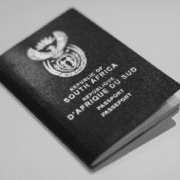
Foreign parent's right to SA child

MAKING A CASE FOR PERMANENT RESIDENCE FOR FOREIGN PARENTS OF SOUTH AFRICAN CHILDREN – TIME TO CHALLENGE THE RELATIVE’S CATEGORY UNDER SECTION 27(g) OF THE IMMIGRATION ACT 13 OF 2002, AS AMENDED (“the ACT”) AND REGULATION 23(7) OF THE 2014 IMMIGRATION REGULATIONS (“the REGULATIONS”)

The case for granting permanent residence to the foreign adult biological or adoptive parents of a South African citizen or permanent resident child.

What do our immigration laws currently say?

Section 27(g) of the Act, read with Regulation 23(7), allows for permanent residence if the foreign applicant:

  1. “is the relative of a citizen or permanent resident”;
  2. “within the first step of kinship”; and
  3. “the citizen of permanent resident shall satisfy the Director-General that he or she is able and willing to support and maintain the foreign relative making the application”.

How are the Act and the Regulations applied?

The Act does not define what a “relative” is. Nor does it define what the “first step of kinship” is.

Ordinarily, the legal steps of interpretation would apply to any meaning that is open to interpretation and undefined in the specific statute or legislation.

In the first instance, we would refer to the ordinary and literal meaning of what a “relative” is and we would resort to the ordinary dictionary meaning, namely:

“A person connected by blood or marriage”.

At first sight, then a “relative” could be any blood related member of the family or could be determined by marriage.

This definition of “relative” is in turn limited to blood relations within the “first step of kinship” as opposed to widening the extent of blood relatives to extended family members.

Once again, the meaning of “first step of kinship” is undefined and we would take heed of the ordinary literal meaning that would envisage a ‘nuclear’ family unit, namely:

 Mother, father and biological or adopted children.

 So, both the parents to the child, and the converse of child to parent, would be in the first line of kinship and eligible for permanent residence.

However, the Regulations per Regulation 23(7) places a further limitation since such South African citizens or permanent resident must in support of his or her foreign parent “relative”:

  1. out of his or her own volition want to support such “relative”; and
  2. demonstrate independent financial means to support his or her “relative”.

The net effect of such limitations would thus ONLY allow a foreign relative parent who applies for permanent residence in terms of section 27(g) of the Act, read together with regulation 23(7) of the Regulations, allows for only ONE specific instance of eligibility that caters solely for:

An adult foreign “relative” of an adult (child over 18 years) South African citizen or permanent resident where citizen or resident is: firstly, financially secure; and second, offers to support his or her adult foreign parent who is making the application.

What it does not allow for?

It is plain to appreciate that the adult foreign applicant cannot apply for permanent residence in terms of section 27(g) of the Act, read with Regulation 23(7), where the South African citizen or permanent resident is not financially secure and too young to maintain and support the adult foreign applicant i.e. a minor or child.

In a nutshell, it excludes the adult foreign applicant applying on the basis of his or her biological or adoptive South African child.

Is this exclusion of permanent residence on the basis of a minor South African child constitutionally valid?

Our Constitution is the supreme law of the land. No legislation or person is above the Constitution.

Does the Act and or the Regulations survive constitutional scrutiny?

Section 27(g) of the Act

It is our considered view that the Act does not fall foul of the Constitution. It preserves the right of family, dignity and asserts a rational purpose to have “relative” in a defined family relationship to remain together on a permanent basis subject to typical requirements.

Regulation 23(7)

The Minister of Home Affairs is expressly empowered, in terms of section 7 of the Act, to make Regulations to give further effect to the implementation of the Act.

However, such power to make Regulations on the part of the Minister is limited by the Constitution subject to certain conduct.

Was it constitutionally permissible when the Minister made Regulation 23(7), and included section 27(g) into the same working of section 26(c) and 26(d) of the Act, that requires such South African citizen or permanent resident to show an ability and willingness to support his or her “relative”?

Firstly, when the Minister contemplated the making of, and introduction, of Regulation 23(7), did the Minister property consult with the Immigration Advisory Board to seek guidance and direction into such policy?

Second, the Minister does not actually state “child” or “children” in the text of Regulation 23(7) but it is plain that section 26(c) and (d) relate to foreign children of adult South African parent/s vis-à-vis a right to permanent residence. Naturally, an adult South African parent/s would be expected to be financially secure and willing to support his or her minor foreign child.

Thus, when the Minister refers to section 27(g) in regulation 23(7), where the relationship is inverted, as the child is different to section 26(c) and (d) of the Act in that the South African such minor child could not possibly be financially secure or have an ability to support and maintain his or her foreign parent/s.

Therefore, Regulation 23(7) applies the same approach for all children, as reflected in the text, and in so doing excludes a foreign adult “relative” linked to a South African child.

The question is whether the Minister ought to have excluded reference to “27(g)” in the wording of Regulation 23(7) as being constitutionally unsound?

It is imperative to appreciate that the question of constitutional infringement of Regulation 23(7) against a foreign relative parent vis-à-vis his or her South African child is not purely a matter of infringement towards the applicant’s rights i.e. the foreign adult “relative” but whether such infringement extends also to such child’s constitutional protection.

To simply refuse an adult foreign “relative” application for permanent residence does not end there.

After all, we are dealing with the interests and entrenched rights of children and the recognition of the role of parenting vis-à-vis the child.  It would be major mistake, and a grave failure, to believe that a refusal of such application against the parent does not affect the interests and constitutional imperatives of children who remain one of the most vulnerable of groups in our society.

In fact, in many cases, such South African child would be illegitimate as the foreign parent would not be married to the South African parent and thus be in an extremely vulnerable position. Let us not forget either that we are concerned with South African children.

Is it OK to refuse the adult foreign relative and ignore the status of children and their protection, care, education, medical support and maintenance? No.

Surely, if the adult foreign parent is refused an application to remain permanently in South African because his or her South African child is a minor, it would preposterous, as it would ignore and violate all legal protocols and protective mechanisms by which our statutes seek to protect and maintain children let alone the Constitution.

What are the legal rights and protections of the child whose parent has been refused?

Our Constitution

Our Constitution clearly gives clear and unequivocal protection to all children in South Africa.

The Rights of Children in terms of section 28 of the Constitution, recognizes the fact that “every child has the right to” inter alia:

  • Family care or parental care or to appropriate alterative care when removed from the family environment;
  • Basic nutrition, shelter, basic health care services social services;
  • Significantly, section 28(2) of the Constitution requires that “a child’s best interests are of paramount importance in every matter concerning the child”.

The Rights of Dignity between family members in terms of section 10 of the Constitution would recognize the correlative rights of children and their parent’s role in their upbringing and nurture, care and support until such child is independent and self-supportive.

Our Statutes

 Despite the Constitution there are numerous pieces of primary legislation that are designed to protect and promote the interests of children whilst at the same time impose a duty on the biological or adoptive parents, inter alia:

  • Maintenance Act in terms of section 15 and the duty of parents to support their children;
  • Children’s’ Act in terms of section 18 dealing with parental responsibilities and rights.

Did the Minister properly consider the rights of children in the working of regulation 23(7)?

It is apparent that the Minister would be obliged to consider the protections of a child when formulating and making Regulations.

It is our considered view that the Minister would not be able to mount a defense against the legitimate limitation of the rights of children by refusing such child’s parent/s to remain permanently in South Africa.

It is undeniable that the foreign relative parent is legally obliged to give effect to such child’s rights to family life and parental responsibility, maintenance/financial support, education, shelter, basic needs. A failure on the part of the parent/s is an offence and by limiting the ability of the parent of such child to abide by its lawful obligations is outrageous and places a further burden on the other parent.

The only basis for the Minister to escape constitutional limitation in terms of section 36 of the Constitution of the current format of regulation 23(7) would be in a society where its norms and values have no regard whatsoever for children and their legal protection.

That defense by the Minister in South Africa is of course unsustainable, repugnant and most indecent. Sadly, this is precisely where we find ourselves at this point in time until such regulations are tested and reworked.

What about the failure of the Immigration Advisory Board (“IAB”)?

It is our contention that the failure on the part of the Minister to consult properly and in a meaningful way with the IAB is also a breach of section 33 of the Constitution where all persons have a legitimate expectation that the Minister, would, in making regulations affecting members of the public, in such a drastic manner when children are involved, have properly consulted with his IAB to ensure that the policy and Constitution are not misaligned leaving such Regulation 23(7) susceptible to breaching the rights of administrative justice of foreign “relative” applicants applying on basis of his or her South African child.

Conclusion

What is plain is that the Minister has failed in his duty to consider the interests of children as is incumbent on him in section 28 of our Constitution.

At the same time the Minister would also be mindful, and in fact, legally obliged to consult with his IAB in making such far-reaching laws that impact on children’s’ lives as expected in terms of section 33 of our Constitution.

The question remains whether the Minister is mindful of the woeful state of affairs and impact on all members of the family that fall prey to the workings of regulation 23(7).

It is constitutionally inexcusable and impermissible to ignore the fact that the child’s interests are simply overlooked as if the child has no link to the foreign relative parent, whatsoever, when such parent is barred from gaining permanent residence in South Africa.

The reality is even more disastrous as such foreign “relative” in the “first step of kinship”  would not be able to remain in South Africa save for a two-year temporary residence visa that prohibits work. It is practically impossible unless the foreign relative parent is highly skilled to procure a exceptional or critical skills working right in South Africa to support such child if he or she is not married to the other parent as a spouse.

Consider the child born illegitimately and the odds of a financially, socially integrated, emotional and mentally stable environment of one working parent.


IMMIGRATION DIVISION – SMIEDT & ASSOCIATES


Refusal of general work visas

REFUSAL OF GENERAL WORK VISAS – TIME TO CHALLENGE HOME AFFAIRS?

South Africa’s immigration laws largely mirror the political order of the day. In 1994, South Africa took its rightful place on the global stage for a host of positive reasons.

Our immigration laws were destined for change as policy considerations shaped the recognition that foreign investment and the importation of needed foreign skills were a priority if our economy was going to prosper.

The Immigration Act 13 of 2002, as amended, (“the Act”) was enacted and made it expressly clear that in its Preamble that:

  • “economic growth is promoted through the employment of needed foreign labour;
  • foreign investment is facilitated;
  • the entry of exceptionally skilled or qualified people is enabled;
  • skilled human resources are increased;
  • academic exchanges within the SADC is facilitated; and
  • tourism is promoted.

Explicit in this stated intention is an unequivocal desire to attract needed foreign skills and an acceptance of the direct relationship of foreign skills and our economic growth.

For almost ten years up to 2014, our Department of Home Affairs (“DHA”) sought to implement our immigration laws, and whilst not perfectly applied, there was at least a measure of appreciation for foreign skills and its benefits.

Between 2014 and 2020

Regrettably, in May 2014, it all changed for the worse when our Act was dramatically amended. Ironically, nothing changed in the DHA’s promise as contained in the Preamble.

Ominously, the amendments to the Act, in so far as the General Work Visa, and most notably, the introduction of the Department of Labour (“DoL”) and its role in the requirements and adjudication, led to a breach of its promise and an antipathy towards foreign skills, investment, tourism and entry of exceptionally skilled people. Arguably even Xenophobic sentiments.

Fast forward 2020 and five years of our new immigration laws took root, our economy is being downgraded faster than you can blink; foreigners, both abroad, and in South Africa, are being treated with contempt in the visa process, our unemployment rate is the highest it has ever been, and consequently, places our country at the top of the wrong pile for all the wrong reasons.

How did this all happen?

There was no political will to live up to its promise in its own Preamble and stated policy direction taken by the DHA.

So what happened to the General Work Visa?

Our Act offers three types of working visas; a General Work Visa, a Critical Skills Work Visa and finally an Intra-Company Transfer Working Visa.

Statistics on the part of the DHA remain shrouded in mystery and would reveal a dark truth since it is estimated that the issuance of General Work Visas have been reduced by more than 90% before 2014.

Sadly, it is not because the calibre of applicant is not up to standard – no! It is the fact that the DHA will scupper the endeavor before the application even hits the DHA officialdom to adjudicate, no matter what the skills-set is being presented. Enter, the DoL.

The ‘impossibility’ of acquiring a General Work Visa, and its knock-on effect is that rogue and unqualified immigration agents make a living by literally ‘selling’ General Work Visas in some back-room to those desperate foreigners to stay in work and over commits DHA resources, which are already severely compromised.

What should happen in a General Work Visa application?

The basis of a General Work Visa is that a skilled worker has been offered employment by a South African employer and has been established to be the best candidate for the position advertised.

Section 19(2) of our Act, as amended, leaves the substance of the General Work Visa to the 2014 Regulations and sets out the requirements in clear and express format; namely, the local employer must embark on an objective and transparent advertising and recruitment campaign to demonstrate that the selected employee has demonstrated the requisite skills or qualifications beyond that of any local applicants.

Our Department of Labour (“DoL”)

Now, technically, the advertising and recruitment requirement is much the same as before 2014, but with one very significant difference – the DoL.

So, what’s up with the DoL?

So, the DoL have been tasked, as government agents of DHA, to oversee this process and satisfy themselves that proper and transparent recruitment and selection processes have been undertaken so as not to flout any the Act. That is the scope and obligation of their involvement in terms of the Act and regulation 18(3)(a) of the 2014 Regulations. Nothing more! DoL are not mandated to pursue any other conduct.

Sadly, the DoL, and it can only be assumed, with the connivance of the DHA, take a pre-meditated, calculated and rogue approach to attend on the prospective employer’s premises and conduct an audit of its employment law obligations under the Basic Conditions of Employment Act, the Unemployment Insurances Fund Act, Workmans Compensation Act and other labour law matters.

The legal ambit of DoL in terms of the Act and regulation 18(3)(a) goes ‘out the window’ and remains a non-event without an informed recommendation of the prospective foreign employee as is their obligation.

As an aside, and without any concern for the actual task at hand, the DoL would either ignore the principal purpose of its attendances on the employer and not even raise the employment and recruitment processes of the prospective employee or at best raise the matter as matter of fleeting consideration.

Regardless of the whether any questions or consideration were being directed at the employer about the foreign employee, the DoL would negatively recommend the employment of the foreign employee no matter what. That would be the end of any positive outcome of any General Work Visa application!

How to resolve?

This unlawful practice and implementation of the laws by both the DHA and the DoL relating to a General Work Visa cannot continue without consequence.

If you as the foreign candidate have the requisite skills, and or, qualifications, and have clearly demonstrated the ability as the best candidate for the position, and you receive a negative recommendation i.e. refusal of general work visa, then do not accept this and contact our law offices as we will fight your corner and ensure that justice prevails.

To conclude, to suggest that foreign employment in South African hampers local employment opportunities is a farce and spin. Such argument falls totally flat when matched against our spiraling empirical evidence relating to our economy and unemployment. Facts don’t lie.

The fact remains our Preamble of the Act requires recognition of the contribution of foreign skills and so does our economy as a developing country. South Africa cannot do it alone. Yet, instead the government pursues a narrow, ill-conceived and orchestrated one-dimensional policy of ignoring what it set out to do in the early 2000’s when it but the Bill before parliament.

The records and statistics do not lie. But someone is though!

IMMIGRATION DIVISION – SMIEDT & ASSOCIATES